
Nutritional Botanicals for Fish and Shrimp
Curing Fin Rot with Indian Almond Leaves
Discover the natural way to combat fin rot using Indian almond leaves. This ultimate guide will empower you to restore your fish’s health effortlessly.
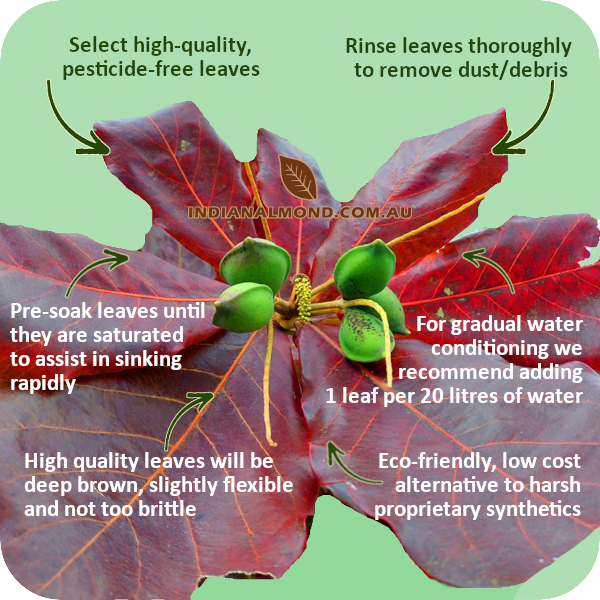 Let’s face it – using Indian Almond leaves is as simple as adding them into your aquarium water. But if you are anything like me, you appreciate some background and additional information before you start a new project. So we will go through the whole process in detail so you can be confident using Indian Almond leaves in your aquarium.
Incorporating Indian almond leaves into your aquarium is a straightforward process, but it’s essential to follow a few guidelines to ensure the best results. Start by selecting high-quality, pesticide-free leaves. Rinse the leaves thoroughly to remove any dust or debris. You can then place the leaves directly into the aquarium or pre-soak them in water to saturate and sink more quickly. The leaves will gradually release tannins and other beneficial compounds into the water, creating a healthy and natural environment for your aquarium fish and shrimp.
The number of leaves you use will depend on the size of your aquarium and the specific needs of your fish and shrimp. A general rule of thumb is to use one leaf per 20 litres of water. You can adjust this based on the desired level of tannins and the water conditions required by your species. It’s important to monitor the water parameters regularly to ensure that the pH and hardness levels remain within the appropriate range for your aquatic pets. If needed, you can remove or add leaves to maintain the desired conditions.
Indian almond leaves will gradually decompose over time, typically lasting between three to four weeks. As the leaves break down, they will release beneficial compounds and nutrients into the water. It’s essential to remove any remaining leaf debris from the aquarium to prevent water quality issues. You can then replace the old leaves with fresh ones to maintain the beneficial effects. By following these simple steps, you can effectively use Indian almond leaves to create a healthier and more natural environment for your aquarium.

Comparing Indian Almond Leaves with Other Natural Additives
Indian almond leaves are front and centre of the new wave of Aquarium botanicals in favour amongst enthusiasts in 2026. For an aquarist seeking a botanical infusion into her tank, the first choice is the tried and trusted Indian almond leaf. For example, alder cones and peat moss are also used to lower pH and soften water. However, Indian almond leaves offer additional benefits, such as their antibacterial and antifungal properties. The leaf also provides a natural source of nutrients and is foundational in biofilm creation that serves as food for shrimp and fry. Combined, these benefits suit aquarium owners who are new to the botanical aquarium setup.
Popular Aquarium Botanicals
-
-
-
-
- Alder Cones
- Peat Moss
- Driftwood
- Oak and Beech leaves
-
-
-
Another popular natural additive is driftwood, which also releases tannins and helps in creating a more natural environment. While driftwood can be aesthetically pleasing, it doesn’t offer the same range of benefits as Indian almond leaves. Driftwood can take longer to release tannins and may not provide the same level of water conditioning. Additionally, driftwood doesn’t decompose in the same way, meaning it doesn’t contribute to the nutrient cycle or biofilm production in the same manner as Indian almond leaves.
There are other leaf litter options (less likely to be encountered in Australia) such as oak or beech leaves, also be used in aquariums. While these leaves can provide some benefits, they don’t offer the same range of properties as Indian almond leaves. For example, oak leaves release tannins but lack the antibacterial and antifungal properties of Indian almond leaves. Beech leaves can provide hiding spots and shelter but may not decompose as quickly or release as many beneficial compounds. By comparing these natural additives, it becomes clear that Indian almond leaves offer a unique combination of benefits that make them an excellent choice for many aquarium enthusiasts.

Common Myths About Indian Almond Leaves
Despite their numerous benefits, there are several common myths and misconceptions about Indian almond leaves that can deter aquarium enthusiasts from using them. One prevalent myth is that the leaves will significantly darken the water, making it unattractive. While the tannins released by the leaves can create a slight tea-coloured tint, this effect is often minimal and can be controlled by monitoring the number of leaves used. Many aquarists find the natural tint to be aesthetically pleasing and a sign of a healthy, natural environment.
Another common myth is that Indian almond leaves are only beneficial for specific species, such as bettas. While it’s true that bettas benefit significantly from the leaves, many other species can also enjoy their advantages. Fish and shrimp that thrive in soft, acidic water can benefit from the water conditioning properties of the leaves. Additionally, the antibacterial and antifungal properties of the leaves can help in preventing infections and promoting overall health for a wide range of species. By understanding the broader benefits of Indian almond leaves, aquarists can make more informed decisions about their use.
A third myth is that Indian almond leaves are difficult to use and require extensive maintenance. In reality, incorporating the leaves into your aquarium is a straightforward process that involves minimal effort. The leaves gradually decompose over several weeks, releasing beneficial compounds and nutrients into the water. Regular monitoring of water parameters and occasional replacement of the leaves are all that’s needed to maintain their benefits. By debunking these myths, it becomes clear that Indian almond leaves are a simple and effective way to enhance the health and beauty of your aquarium.
Using Indian Almond Leaves – Pros and Cons
Admittedly there is an overwhelming trend toward adopting Indian Almond Leaf into the home aquarium – but there are some caveats to be wary of. Here’s a breakdown of what works and what we suggest from our experience.
-
- Whole Dried Leaves – Whole dried leaves are what we sell at IndianAlmond.com.au and it is no surprise that this is the most common presentation sold online and in pet stores. The whole dried leaves retain full shape and are ideal for aquariums because they sink slowly and release tannins over several weeks.
Pros: Natural, whole-of-leaf appearance, long-lasting effect, easy to add and remove from aquarium.
Cons: May require boiling to reduce mould if present; larger size may be cumbersome in nano tanks. - Cut or Crushed Leaves – Pre-cut into smaller pieces for larger exposed surface area offering faster infusion.
Pros: Quick release of tannins, convenient for instant impact brewing extracts.
Cons: Can cloud water; can be difficult to assess what other steps are included in the processing action; can be a pain to remove unsightly pieces of cut leaf from the aquarium. - Powdered Extract – Highly processed form used in commercial fish medications or supplements.
Pros: Precise dosing; longer shelf-life, more convenient storage over time; powders have massive available surface area for instant impact – be wry of adding too much.
Cons: Defeats the whole purpose of using natural botanicals in a sense; Less clarity around the exact make-up ingredients of the powder, may contain fillers; higher cost for perceived “better value” of concentrated Indian almond leaf. - Tea Bags or Infusions – Not generally freely available to Australian consumers; Packaged for human consumption, often blended with other herbs – and these other herbs have questionable impact on your aquarium fish.
Pros: Convenient, labelled for dietary use.
Cons: May not be suitable for aquariums; Best advised to verify ingredients and check if it is compatible with fish tank inhabitants.
- Whole Dried Leaves – Whole dried leaves are what we sell at IndianAlmond.com.au and it is no surprise that this is the most common presentation sold online and in pet stores. The whole dried leaves retain full shape and are ideal for aquariums because they sink slowly and release tannins over several weeks.
In brief the advantages of Using Almond Leaf far outweigh the considerations. Terminalia catappa leaves are a natural water conditioner with proven antibacterial benefits. The leaves support fish health during illness, and prompt florid spawning behaviours. From a budget perspective, indian almond leaves are incredibly bio-active agents in your aquarium on a dollar cost basis. Environmentally responsible and sustainably harvested, using Indian almond leaves is a way to support a local Australian family business.
 Adding Indian Almond Leaves to your fish tank
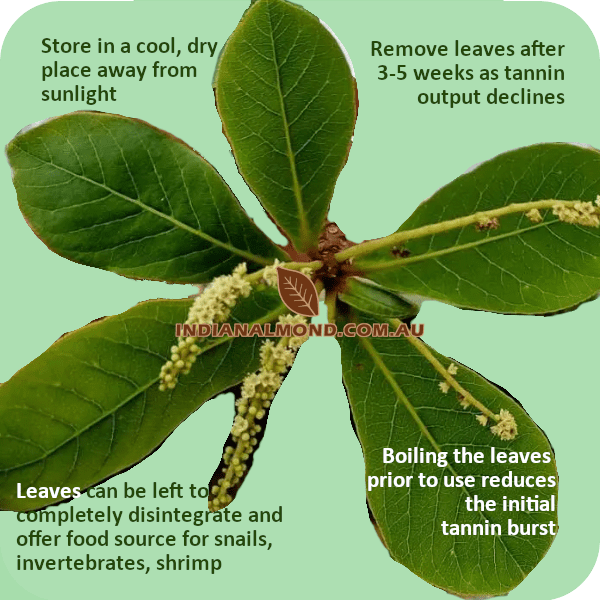 Adding Indian Almond Leaves to your fish tank
Whilst the leaves release an amount of tannin into the water of your aquarium, the depth of colour is not noticeable to the extent that it will affect your viewing pleasure. Ideally, you will notice a subtle depth of tone a couple of shades darker, again a more natural shift away from the artificial crystal clear glass-like water.
Regular water changes and a sound filtration system will ensure that the discolouration is kept to barely noticeable levels. At our recommended rate of one leaf per 4 gallons – or one leaf per 20 litres – you can gain all the benefits without any significant darkening of the water.
Indian almond leaves offer a unique combination of benefits that make them an invaluable addition to any aquarium. From their nutritional advantages for fish and shrimp to their natural water conditioning properties, these leaves contribute to the overall health and well-being of your aquarium tank inhabitants. The leaves enhance the aesthetics of your aquarium, create optimal breeding conditions, and help in controlling algae growth. By understanding how to use Indian almond leaves effectively and comparing them with other natural additives, you can make informed decisions that benefit your aquarium.
The common myths surrounding Indian almond leaves often deter aquarists from experiencing their full potential. By debunking these misconceptions, it becomes evident that the leaves are a versatile and beneficial tool for maintaining a healthy and natural aquarium environment. Whether you’re a seasoned aquarist or just starting, incorporating Indian almond leaves into your setup can lead to a more vibrant and thriving aquatic world.
In conclusion, Indian almond leaves are a natural wonder that offers numerous benefits for your aquarium. By enhancing water quality, promoting fish health, and elevating the overall experience, these leaves can transform your aquarium into a thriving and beautiful ecosystem. Embrace the power of Indian almond leaves and unlock the secrets of a flourishing aquatic environment.